
Tooth Extractions – Owasso, OK
Gently Removing Your Hurting Teeth
Naturally, you want to keep your natural teeth for the rest of your life. Dr. Gaches will do all he can to make that a reality. However, there are times when teeth are beyond saving and must be removed to maintain your oral health. When tooth extractions are deemed necessary, they will always be performed with the utmost care to help you feel at ease at Infinite Smiles Dentistry. Our team will also help you get into your appointment quickly to alleviate your pain.
Why Choose Infinite Smiles Dentistry For Tooth Extractions?
- Same-Day Emergency Appointments
- Practiced Dental Techniques For Comfortable Care
- Multiple Options For Tooth Replacement
Reasons Why Tooth Extractions Are Necessary
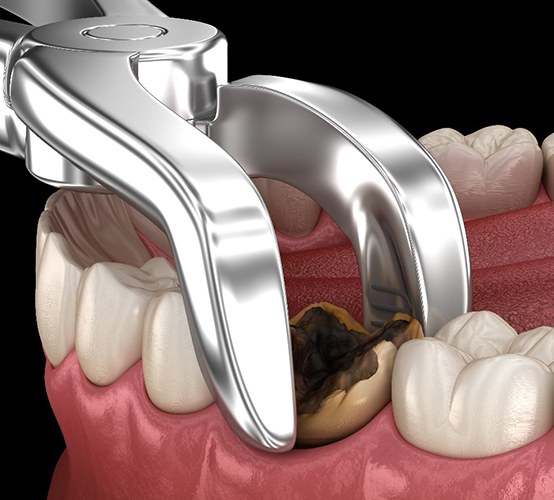
Tooth extractions may be needed for many reasons including severe decay, advanced gum disease, overcrowding, or infection. Removing a problematic tooth can prevent further oral health problems and alleviate pain.
Pain relief and damage aren’t the only reasons why an extraction may be recommended by Dr. Gaches. Teeth might also need to be removed if:
- Room needs to be made for dentures or another form of tooth replacement.
- A baby tooth is getting in the way of an adult tooth erupting.
- You have an impacted wisdom tooth that is disrupting your oral health.
The Process of Removing a Tooth

Before extraction occurs, you’ll make plans for tooth replacement with Dr. Gaches. While you likely won’t be undergoing any additional treatment now, planning to replace your lost tooth is essential to maintaining your oral health in the future.
Once the extraction begins, Dr. Gaches will numb the area with local anesthesia to ensure your comfort. when you’re completely numb, he will use a special instrument called an elevator to loosen the affected tooth in the socket.
Next, a pair of dental forceps is used to gently rock the tooth from side to side until it wiggles free. The site will then be cleaned and treated with sterile gauze to promote clotting.
Tooth Extraction Aftercare

After a tooth extraction, it's very important to follow Dr. Gaches’ aftercare instructions. This usually involves:
- Avoiding spicy, hard, or sticky foods.
- Gently swishing with warm salt water after the first 24 hours.
- Steering clear of the extraction site while brushing.
- Avoiding smoking and alcohol.
- Pausing the use of straws to avoid dislodging the clot.
- Holding off on strenuous exercise.
Following these guidelines and any others prescribed by Dr. Gaches will keep your extraction site clean and promote swift healing. Once you’ve fully healed, you can begin the tooth-replacement process to ensure you’re not affected by the lost tooth in the long term.
Wisdom Tooth Extractions

The wisdom teeth appear in the mouth around the late teens or early twenties. However, the lack of available space often leads to them becoming partially or completely trapped in the jaw, causing pain, overcrowding, and even infections during their failed eruption. We can use X-rays to check the status of your wisdom teeth and determine whether they need to be removed before they start causing problems. Regular dental checkups will ensure that the young adults in your life avoid any severe complications from irregular or impacted wisdom teeth.
Understanding the Cost of Tooth Extractions

Tooth extractions are never your dentist’s first choice. However, sometimes they are necessary to preserve the health of the rest of your smile. During your appointment, we will discuss the cost of your treatment in detail so you will know exactly what you can expect. Until then, here’s what you should know.
Factors That Can Affect Tooth Extraction Cost

There are multiple factors that contribute to the cost of tooth extractions. Here are some that make the biggest difference.
- Number of Teeth: The more teeth that need to be extracted, the higher the overall cost will be.
- Complexity: Depending on where your teeth are located and whether they are impacted, the cost can vary. Some extractions are easier to perform than others, which require additional time.
- Tooth Replacement: If you need to replace your extracted tooth, you should consider this as well.
Does Dental Insurance Cover Tooth Extractions?

Dental insurance providers usually cover tooth extractions between 50% and 80%. However, there may be limits in place or a waiting period before your coverage kicks in. Every plan works a little bit differently, so it is a good idea to confirm this ahead of time so that you don’t run into any surprises on your bill. If you need help understanding your plan or what it covers, don’t hesitate to reach out!
How to Make Tooth Extractions Affordable

If you don’t have dental insurance, this doesn’t mean that you are completely out of luck. With our dental membership plan, you can save 20% on tooth extractions completed at our practice. We are also happy to accept payments through CareCredit – a third-party financing company that can split the cost of your treatment into manageable monthly installments with little to no interest. If you have any questions or need help applying, we’d be happy to assist you.
Tooth Extractions FAQs
What’s Recovery for Tooth Extractions Like?
When you come to us for a tooth extraction, we will give you a series of aftercare instructions that can help you heal quickly and effectively. The most important factor is rest; you should take care not to strain yourself in the 24 hours after your procedure. You should also avoid dry socket, which can happen if the emerging clot is pulled out of place by suction in the mouth. You should avoid using straws, spitting excessively, or doing anything else that can dislodge the clot.
It's common to be a little bit sore for a few days after your procedure, so you should be sure to take any OTC or prescribed medication as directed.
What Are My Options for Replacing a Missing Tooth?
There are several options for how you can replace your missing teeth, and which one is right for you depends on your particular situation. A dental bridge can be used to replace a few missing teeth that are lying in sequence, and is constructed from a series of pontics set between two dental crowns.
There are also dentures, which are a series of artificial teeth on an acrylic base. These adhere via suction, and are ideal for patients who want to replace most or all of their teeth on a gum ridge.
Finally there are dental implants, which are artificial teeth connected to metal rods surgically placed in the jaw. These are strong and stable, making them an excellent method of tooth replacement. We’ll be happy to tell you more about the options available to you when we meet you in person.
Can I Leave the Space Empty After a Tooth Extraction?
Nobody really wants a gap in their smile, but some people are still tempted to leave the spot empty. This typically isn’t a good idea, as teeth will usually move to fill the gaps in the smile and create misalignments. Missing even a single tooth can also make it harder to process food, leading to poorer nutrition.
For these reasons, among others, it’s strongly recommended that you use one of the methods above to replace teeth that you’ve lost.
Can I Smoke After Getting a Tooth Extracted?
Tobacco products can delay healing in a variety of ways. Nicotine is a vasoconstrictor, which means that the flow of the blood to the mouth is disrupted by smoking. Moreover, vape and tobacco smoke can irritate the emerging wound directly, further delaying healing.
Many of these products also create suction in the mouth, which can pull the clot out of the mouth and cause dry socket. It’s therefore ideal that you refrain from smoking after your wisdom tooth procedure, at least for a few weeks after the treatment. If you’ve had trouble quitting in the past, let us know and we’ll be happy to help you.
Does Getting a Tooth Extracted Hurt?
Of course, this list of FAQs would be incomplete without this question. If this has been a concern of yours, we have good news: the first step of the procedure is always to numb your mouth thoroughly. That way, you don’t feel any pain during your time in the treatment chair. We will also provide you with aftercare instructions to help you stay comfortable while you heal (i.e., changing the gauze pads as needed, using a cold compress for 10 minutes at a time, taking OTC pain medication as directed).
How Should I Prepare for My Tooth Extraction?
Prior to your tooth extraction in Owasso, we recommend stocking up on everything you need to recover comfortably at home, like soft foods, cold compresses, and OTC pain medication. It’s also important to arrange for an adult that you know and trust to drive you to and from your appointment. Finally, don’t hesitate to reach out to us with any questions you have, including whether or not we’d like you to fast the morning of your procedure.
I Am Scared of Getting a Tooth Extracted. What Should I Do?
Oftentimes, patients are hesitant to share their concerns and fears. However, we want to know how we can help you have the positive experience that you deserve while caring for your smile! If you struggle with dental-related anxiety, then that may involve walking you through the treatment process so you know exactly what to expect. Or, if you struggle with a fear of needles and need multiple tooth extractions, the solution may be adding nitrous oxide to your treatment plan.
How Soon Can I Eat After My Tooth Extraction?
We recommend waiting until the numbing agent has completely worn off to eat, which usually takes a few hours. This is important because, if you haven’t regained full sensation in your mouth, then you could bite down hard on your tongue, your lips, or the insides of your cheeks without realizing it.
Important reminder: You need to stick to extremely soft foods following your procedure, like plain yogurt, applesauce, and non-hot soup.
What Can I Do to Speed Up The Healing Time?
While some of our patients love the idea of dedicating a few days solely to resting, others are less than enthused. If you fall into the latter group, then you might be wondering what you can do to speed up the healing time. The answer is simple: follow the aftercare instructions we give you (i.e., avoiding strenuous exercise, eating soft foods, changing the gauze pads as needed). After all, they are designed to promote healing and prevent issues from developing, like a dry socket.